
Green Careers in Natural Resources, Environmental Science & Conservation

Do you care about the environment, love being outdoors, or want a job that helps protect the planet? This career sector offers exciting paths where you can work with wildlife, forests, water, land, and environmental systems while making a real difference in your community and beyond.

🍃Why choose this sector?

Natural Resources, Environmental Science & Conservation careers focus on protecting the world around us. People in these jobs help manage forests, study ecosystems, protect wildlife, improve water quality, restore habitats, and solve environmental challenges. These careers combine science, technology, teamwork, and hands-on problem solving.

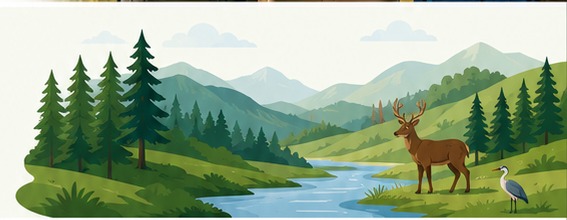
Illustration representing Green Careers in Natural Resources, Environmental Science & Conservation

🍃 Careers you can explore 🍃

⚙️ Skills you’ll build

Collaborative & Interpersonal Skills

  • Communication
  • Teamwork & collaboration
  • Problem solving
  • Critical thinking
  • Leadership
  • Adaptability
  • Initiative
  • Inquisitive

Technical & Applied Skills

  • Field research and environmental sampling
  • GIS, mapping, and spatial tools
  • Environmental data analysis
  • Habitat and ecosystem assessment
  • Water and soil testing
  • Environmental regulations and reporting

🎒 How to get started in high school

  1. Take classes like biology, environmental science, chemistry, earth science, and agriculture.
  2. Join clubs or activities related to science, conservation, gardening and recycling, or outdoor leadership.
  3. Volunteer with parks, nature centers, zoos, watershed groups, or community cleanups.
  4. Look for internships, summer programs, job shadowing, or career and technical education opportunities.
  5. Build experience by exploring local environmental issues and hands-on projects.

🎓 Education pathways

Natural-resource careers offer pathways from field-based technical work through advanced science, policy, and research:

  • High School: Biology, chemistry, earth science, environmental science, statistics, geography, computer science, and outdoor or conservation programs.
  • Certificate / Technical Training: GIS and mapping, environmental monitoring, forestry, wildland management, water-quality testing, or conservation field skills.
  • Associate Degree: Environmental science, natural resources, forestry, wildlife management, geographic information systems, or environmental technology.
  • Bachelor’s Degree: Environmental science, biology, ecology, forestry, wildlife biology, hydrology, geography, data science, or public policy.
  • Master’s Degree: Ecology, conservation biology, natural-resource management, environmental policy, data science, hydrology, or other specialized scientific fields.
  • Doctoral / Professional Degree: Ph.D. programs support advanced research and university careers; law school can lead to environmental regulation and policy practice.

🌎 Make an impact

Every education level offers a different way to protect ecosystems and communities:

  • Associate Degree: Collect field data, support habitat restoration, map natural resources, monitor forests and waterways, and provide hands-on support for conservation projects.
  • Bachelor’s Degree: Work as an environmental scientist, forester, wildlife biologist, park professional, or data specialist helping communities understand and protect natural systems.
  • Master’s Degree: Lead research and conservation programs, manage natural resources, analyze complex environmental data, and help shape science-based policy and long-term environmental strategy.