


Green Careers in Renewable Energy & Clean Technology

Are you excited by innovation, sustainability, and technology that powers a cleaner future? This career sector includes jobs that help create, install, maintain, and improve clean energy systems like solar, wind, battery storage, and energy-efficient technologies.

🍃Why choose this sector?

Renewable Energy & Clean Technology careers focus on building a more sustainable world. People in these jobs help generate clean electricity, improve energy efficiency, design better systems, reduce pollution, and support new technologies that power homes, schools, businesses, and transportation.

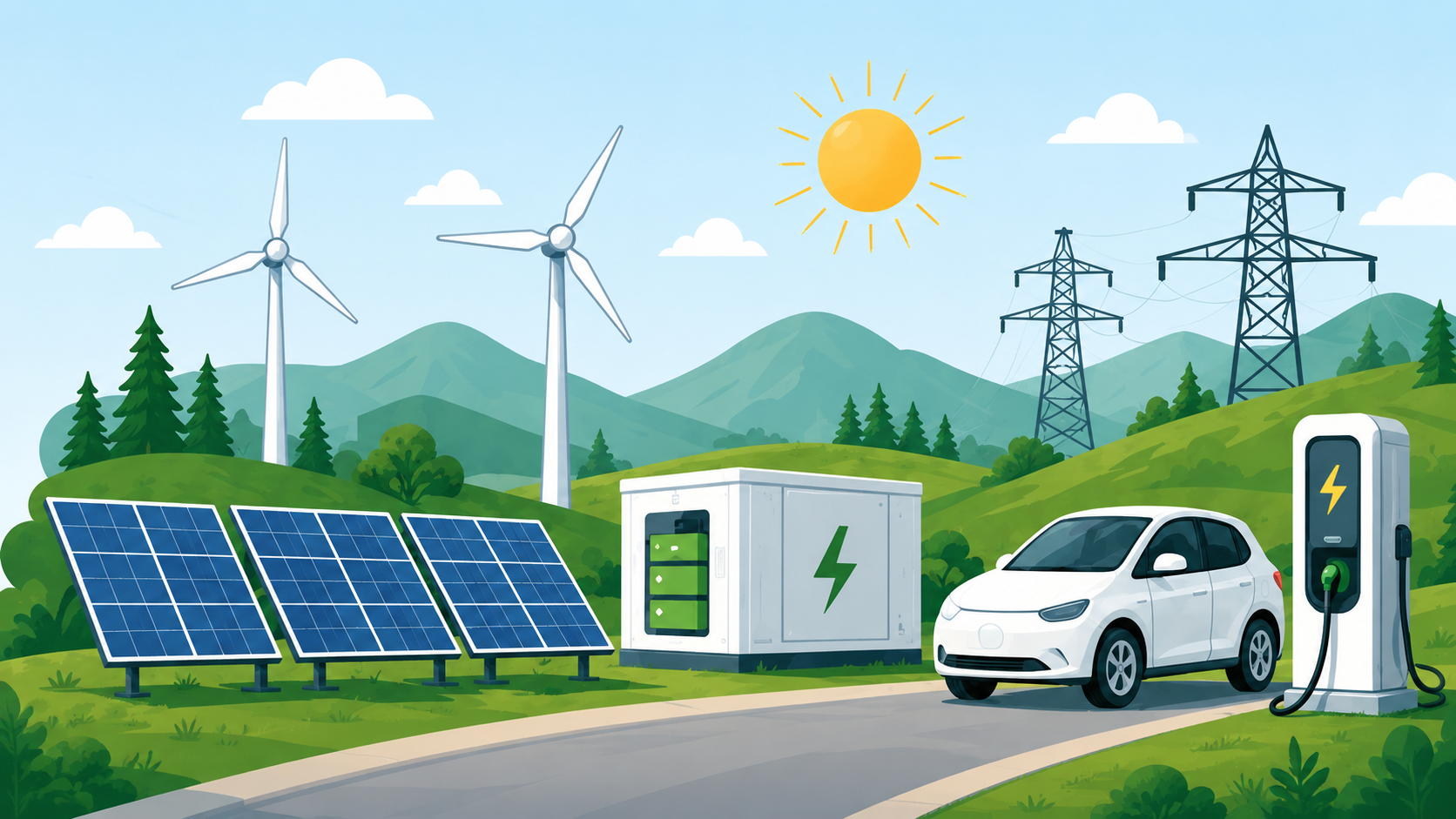
Illustration representing Green Careers in Renewable Energy & Clean Technology

🍃 Careers you can explore 🍃

⚙️ Skills you’ll build

Collaborative & Interpersonal Skills

  • Communication
  • Teamwork & collaboration
  • Problem solving
  • Critical thinking
  • Adaptability
  • Initiative
  • Inquisitive
  • Project management

Technical & Applied Skills

  • Electrical and mechanical systems
  • Energy auditing and performance analysis
  • Renewable-energy equipment and controls
  • Building and system design
  • Troubleshooting and maintenance
  • Environmental, energy, and safety regulations

🎒 How to get started in high school

  1. Take classes like physics, environmental science, algebra, engineering, and computer science.
  2. Join STEM, robotics, energy, or environmental clubs and activities.
  3. Explore hands-on projects such as solar kits, coding, electronics, or design challenges.
  4. Look for internships, summer camps, career and technical education, or job shadowing opportunities.
  5. Learn about local clean energy programs, green buildings, and electric transportation in your community.

🎓 Education pathways

Clean-energy careers range from skilled trades to advanced research and design:

  • High School: Physics, environmental science, algebra, calculus, engineering, computer science, drafting, electronics, and hands-on STEM or CTE programs.
  • Certificate / Apprenticeship: Solar installation, electrical work, energy systems, HVAC, building controls, wind technology, or other clean-energy trades.
  • Associate Degree: Renewable energy technology, electrical technology, engineering technology, energy management, or related technical fields.
  • Bachelor’s Degree: Engineering, architecture, environmental science, hydrology, energy systems, computer science, or sustainable design.
  • Master’s Degree: Renewable energy engineering, sustainable design, architecture, environmental engineering, energy policy, hydrology, or specialized technology fields.
  • Doctoral / Professional Degree: Ph.D. programs can lead to advanced research, technology development, or university careers; professional degrees and licenses may be required for architects and some engineers.

🌎 Make an impact

Different education levels contribute to the clean-energy transition in different ways:

  • Associate Degree: Install, maintain, troubleshoot, and improve solar, wind, battery, electrical, and building-energy systems that reduce fossil-fuel use.
  • Bachelor’s Degree: Design efficient buildings and energy systems, evaluate energy use, manage renewable projects, or study water and environmental resources affected by energy development.
  • Master’s Degree: Lead complex clean-energy projects, develop advanced technologies, shape energy and climate strategy, and design large-scale systems for resilient, low-carbon communities.